Elektra
Quick Overview
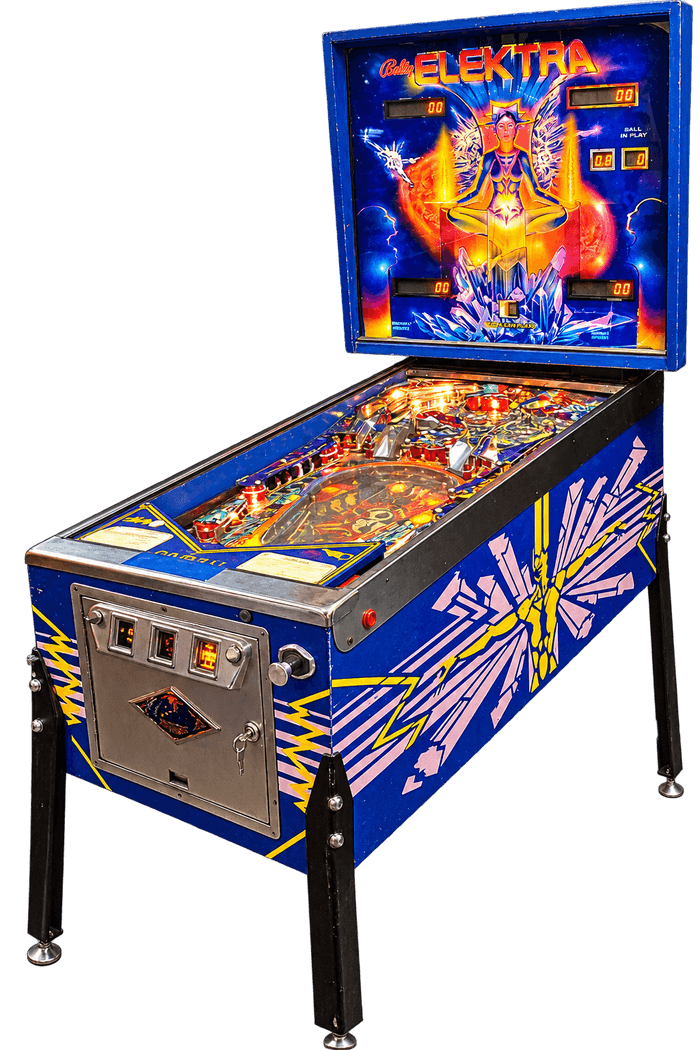
Elektra is one of Bally's most extraordinary pinball machines from the early 1980s. Its futuristic, sci-fi visual style is striking at first glance, but the real surprise is hidden in the playfield: Elektra is playable across three separate levels. The upper, main, and a lower mini-playfield tucked beneath the main playfield together form a highly unusual design. Elektra was Bally's first solid-state pinball machine to feature a three-level playfield.
Basics
- Release1981
- ManufacturerBally Manufacturing Co.
- DesignerClaude Fernandez
- ProgrammingRehman Merchant
- ArtTony Ramunni
- GenrePinball
- Players1–4
- Playfield3 levels
- Flippers6
- Multiball2-ball
- Units produced2,950
Creators
Standout features:
Play It Live!
Three playfields. Six flippers. A genuine 1981 Bally rarity. Explore all three levels, collect Elektra Units, start multiball, and try the Elektra pinball machine in person at Arcade Museum Budapest.
Insert CoinGame Objective
Elektra's two main goals are reaching multiball and collecting so-called Elektra Units. The game starts on the main and upper playfields. Four metal ramps lead up to the top level, while targets, spinners, and bonuses along the way boost your score. The Elektra Units you collect unlock something truly special, though. If you've gathered enough of them, losing the ball doesn't necessarily end the action — the third level hidden beneath the playfield comes to life. The upper lighting goes dark, the lower playfield lights up, and play continues deep inside the machine with a separate ball.
Fun Facts
- Elektra has three separate playfield levels, each with two flippers.
- The main playfield features a thick, clear plexiglass surface that lets you see the third playfield hidden beneath it.
- The machine has four balls in total, each serving a different purpose.
- Two balls handle normal play and the two-ball multiball.
- One separate ball sits on the upper playfield as a captive ball.
- The fourth ball belongs exclusively to the lower playfield.
- When the lower level activates, the upper playfield's lighting goes dark, drawing attention to the lower playfield instead.
- A separate two-digit display on the lower part of the backglass shows the number of Elektra Units collected.
- Elektra also uses speech effects — a genuinely striking and modern feature for 1981.
- Only 2,950 units were ever produced.
Why Is It Special?
Elektra is a perfect example of an era when pinball manufacturers tried to reinvent the game with increasingly bold mechanical ideas. This isn't simply a second playfield raised up on a ramp. Bally hid an entire mini-playfield beneath the main one, complete with its own ball, lighting, and flippers. When the lower playfield activates and the top of the machine goes dark, Elektra transforms almost completely. More than four decades after its release, there's still a moment that makes people blurt out: "Wait… there's another playfield down there?"